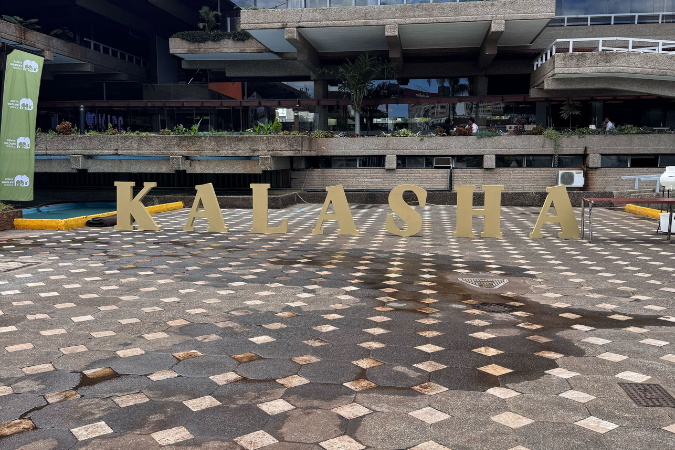
The industry’s focus this week has been on the KICC for the Kalasha International Film & TV Market, Festival and Awards. Whether you are spending the week in the halls or following the updates from afar, the energy surrounding this year’s theme, “Reel Money: The Business of Film,” has been impossible to miss.
For a long time, our industry conversations have centered on the "magic" of storytelling. But magic doesn’t pay the crew or sustain a production house. As the dialogue unfolds, we’ve been reflecting on what "the business of film" actually looks like in practice.
Who gets to be in the room?
Looking at the 2026 program, it’s clear the Kenya Film Commission is aiming for high-level professionalization. With sessions on Virtual Production, Data Protection, and Financing Structures, the content is a blueprint for a modernized industry. These aren't just theory sessions, they are vital tools for any filmmaker.
However, this brings us to a conversation about access. At KES 1,500 for a day pass, we find ourselves thinking about the "indie" filmmaker. We absolutely love that students have a free pass, that is a huge win for the future of our industry!
But when the education offered like the GODOX Masterclass or the IP sessions is this essential, we want to make sure the cost for independent filmmakers doesn't become a barrier to the knowledge they need to grow. A market thrives on volume; we need the next generation in the room to turn that "Reel Money" theme into a reality.
Short Films and Feature Films
As we look at the awards, a point raised by our friends at Sinema Focus really resonated with us at LBx: the practice of grouping short films and features into the same categories.
In any other professional field, you wouldn't compare a sprint to a marathon.
- A short film is about intensity and finding a voice within a compressed frame.
- A feature film is a massive logistical undertaking that requires sustaining a narrative (and a budget) over 90+ minutes.
Recognizing these as distinct crafts isn’t about being picky; it’s about professional clarity. As the Kenyan industry matures, our awards system should reflect that growth by honoring the unique demands of each format.
Judging the work
One shift we are genuinely celebrating this year is the move toward a 95% jury-led voting system.
While audience engagement is fun, the long-term credibility of our industry depends on technical excellence and craft. Shifting the weight to a jury of peers ensures that a win at Kalasha is a signal of quality that carries weight both at home and across borders. It moves us away from social media popularity contests and back toward the work itself.
From "Pitching" to "Pipelines"
It is encouraging to see dedicated pitching sessions on the schedule, covering everything from Animation to Documentaries. The next evolution we’re hoping for? Moving from pitching for a "prize" to pitching for a "pipeline." We want to see the Kalasha Market become a space where international buyers and commissioners aren’t just guests, but active participants closing deals on the floor. If we are talking "Reel Money," the market should be the engine that drives it.
Where This Leaves Us
There is a lot to be proud of. The KES 200,000 cash prize for winners in each category is a powerful gesture from the Kenya Film Commission. It’s a tangible "thank you" for the labor and investment filmmakers put into their work.
The business of film isn't built overnight. It’s built in the smaller, intentional shifts:
- How we make rooms accessible.
- How we categorize our craft.
- How we reward excellence.
If our goal is sustainability, the "Reel Money" conversation can’t end when the KICC doors close. It has to be reflected in how we work, every single day.